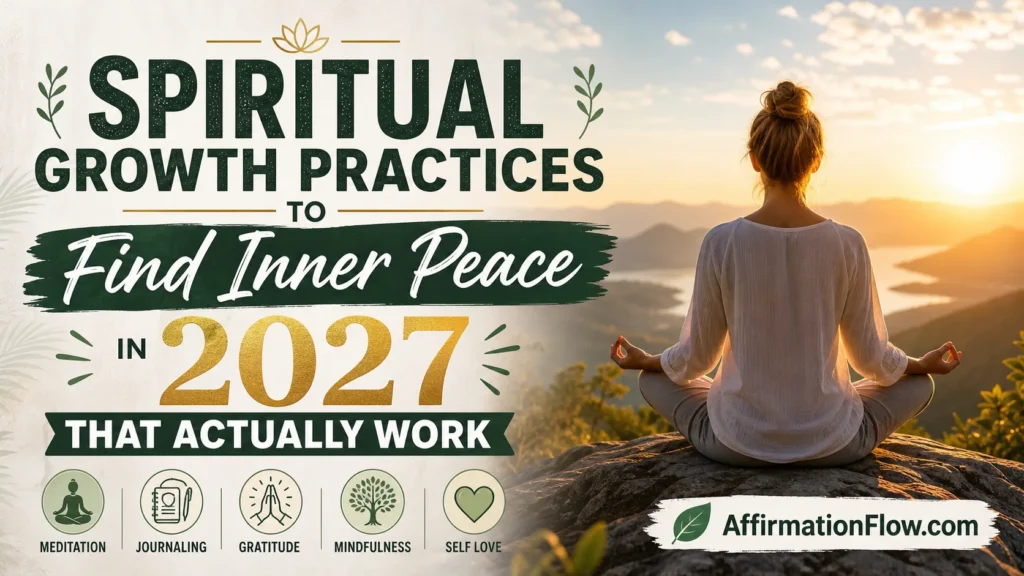
We live in a world that constantly demands our attention. Notifications ping, deadlines loom, and the noise rarely stops. This year, more people are turning to spiritual growth practices to find inner peace in 2027 because the old coping methods aren’t cutting it anymore.
Inner peace isn’t about escaping your life. It’s about changing how you move through it. When you build a spiritual practice, you create space for stillness even when everything around you feels chaotic.
These practices aren’t complicated. They don’t require special equipment or years of training. What they do require is your willingness to show up for yourself, even when it feels uncomfortable.
Why This Year Feels Different
Something has shifted in our collective consciousness. More people are recognizing that achievement alone doesn’t bring fulfillment. We’re tired of feeling anxious, disconnected, and scattered.
The traditional markers of success don’t satisfy the way we thought they would. We have more yet feel less. We’re more connected yet lonelier than ever.
This awareness creates an opening. When we realize external circumstances won’t fix our internal state, we start looking inward. That’s where spiritual growth begins.
You might have noticed this in your own life. Maybe meditation apps are showing up in your social feeds. Perhaps friends are talking about breathwork or energy healing.
This isn’t a trend. It’s a return to ancient wisdom that our modern lives desperately need.
Building a Morning Stillness Practice
The first hour of your day sets the tone for everything that follows. When you begin with stillness instead of stress, you approach challenges differently.
Start with just five minutes. Sit somewhere comfortable before you check your phone. Close your eyes and focus on your breathing.
Your mind will wander. That’s normal and expected. When you notice thoughts pulling you away, gently return to your breath. No judgment, no frustration.
This simple act trains your awareness. You learn to observe your thoughts without getting swept away by them. Over time, this creates space between stimulus and reaction.
Some mornings will feel peaceful. Others will feel restless and uncomfortable. Both are valuable. The practice isn’t about feeling a certain way.
As you build consistency, you might extend to ten or fifteen minutes. You might add gentle stretching or journaling. Let your practice grow organically.
The key is regularity, not perfection. Five minutes every day beats an hour once a week.
Working With Your Breath
Your breath is the bridge between your conscious and unconscious mind. It’s always available, always ready to anchor you back to the present moment.
Breathwork practices range from simple to complex. Start with basic conscious breathing. Place one hand on your chest and one on your belly.
Breathe in slowly through your nose, feeling your belly expand. Pause briefly. Exhale through your mouth, letting your belly fall. Repeat for several minutes.
This activates your parasympathetic nervous system, telling your body it’s safe to relax. Your heart rate slows. Your shoulders drop. Tension releases.
When anxiety strikes during the day, return to this practice. Even three deep breaths can shift your state.
Box breathing offers another powerful technique. Inhale for four counts, hold for four, exhale for four, hold for four. This creates rhythm and balance.
You can practice anywhere. Waiting in line, stuck in traffic, before difficult conversations. Your breath is always with you, ready to bring you home to yourself.
As you deepen your relationship with your breath, you’ll notice subtle shifts. You respond instead of react. You pause before speaking. You move through your day with more ease.
Creating Sacred Space in Your Home
Your environment affects your energy. Creating a physical space dedicated to your spiritual practice reinforces your commitment and provides a sanctuary when you need it.
This doesn’t require a whole room. A corner, a shelf, even a windowsill can become sacred space. What matters is intention.
Choose items that resonate with you. A candle, a cushion, a plant, meaningful objects that remind you of peace and presence.
Keep this space clean and uncluttered. When you approach it, you’re signaling to yourself that this time matters.
Some people include elements representing earth, air, fire, and water. Others prefer simplicity. There’s no right way to do this.
Your sacred space becomes an anchor. On difficult days, just sitting there can calm your nervous system. Your body learns to associate this space with peace.
You might light incense or play soft music. You might sit in silence. Let your practice be uniquely yours.
Over time, this space holds the energy of all your practice sessions. Walking past it during the day reminds you of who you are beneath the stress and stories.
Moving Meditation Through Your Body
Meditation doesn’t always mean sitting still. For many people, movement creates the pathway to inner peace more effectively than stillness.
Walking meditation brings mindfulness into motion. Walk slowly, feeling each foot contact the ground. Notice the shift of weight, the lift and placement of each step.
Your mind will speed up, wanting you to walk faster. That’s normal. Keep your pace slow and deliberate. This isn’t about getting anywhere.
Yoga combines breath, movement, and awareness. You don’t need to twist yourself into complicated poses. Simple stretches done with full attention become meditation.
Qigong and tai chi offer gentle, flowing movements that cultivate energy and calm. These practices have supported inner peace for thousands of years.
Dancing freely to music you love can also become spiritual practice. Let your body move however it wants. Release what you’re holding.
The point is bringing full awareness to physical sensation. When you’re fully in your body, you can’t be lost in anxious thoughts about the future.
Try different approaches. Notice what helps you feel grounded and present. Your body has wisdom that your thinking mind can’t access.
Working With Energy and Intention
Everything is energy, including your thoughts and emotions. Learning to work consciously with energy transforms how you experience life.
Start noticing what shifts your energy. Certain people, places, activities either drain or replenish you. Pay attention without judgment.
Energy healing practices like Reiki, sound healing, or crystal work can support your journey. You don’t need to understand how they work to benefit from them.
Setting daily intentions creates energetic direction. Each morning, choose how you want to feel and move through your day. Return to this intention when you get off track.
Clearing practices help release stuck energy. Smudging with sage, taking salt baths, or simply opening windows invites fresh energy in.
Gratitude shifts your energetic frequency instantly. When you appreciate what you have, you align with abundance rather than lack.
Notice the energy you bring to interactions. Are you present and open, or distracted and defensive? Your energy affects everyone around you.
As you become more sensitive to energy, you’ll make different choices. You’ll protect your peace more carefully. You’ll know when to engage and when to withdraw.
Connecting With Nature
Nature is the ultimate teacher of presence. Trees don’t worry about tomorrow. Rivers don’t resist their flow. Mountains stand steady through all weather.
Spending time outside recalibrates your nervous system. The Japanese practice of forest bathing shows measurable health benefits from simply being among trees.
You don’t need wilderness. A park, a garden, even sitting under a single tree can reconnect you with natural rhythms.
Remove your shoes and stand on bare earth. This grounding practice, called earthing, helps discharge stress and inflammation.
Watch how nature moves. Clouds drift. Leaves fall. Water flows. Everything changes, yet nothing rushes. This teaches patience and acceptance.
Bring natural elements into your home. Plants, stones, shells, and wood carry the energy of the earth.
Align with natural cycles. Notice the moon phases. Mark the seasons. Our bodies remember these rhythms even when our schedules ignore them.
When you feel overwhelmed, go outside. Even five minutes can shift your perspective and remind you that you’re part of something larger.
The Practice of Letting Go
Inner peace requires releasing what no longer serves you. This might be the hardest spiritual practice, and the most necessary.
Start noticing what you’re holding onto. Old resentments, future worries, stories about yourself that aren’t true anymore. These create suffering.
Forgiveness isn’t about condoning harm. It’s about freeing yourself from the weight of carrying anger. You forgive for your own peace, not for anyone else.
Journaling helps release stuck emotions. Write without filtering. Burn the pages if you want. The act of expression creates movement.
Practice non-attachment with outcomes. Do your best, then release your grip on results. Control is an illusion that creates anxiety.
Let go of who you think you should be. Accept who you are right now. This moment, exactly as you are, is enough.
Release the need to be right. Would you rather be right or peaceful? You can’t always have both.
Letting go is ongoing. You’ll need to release the same things repeatedly. Each time, you create more space for peace to grow.
Building Community and Connection
Spiritual growth happens individually, but we need community to sustain it. Finding others on this path reminds you that you’re not alone.
Look for meditation groups, yoga classes, or spiritual study circles. Being in the energy of committed practitioners strengthens your own practice.
Share your journey carefully. Not everyone will understand. Find people who respect your path even if theirs looks different.
Teachers and guides can accelerate your growth. Books, podcasts, courses, and mentors offer perspectives that shift your understanding.
Service to others deepens spiritual practice. Volunteering, helping neighbors, or simply offering kindness connects you to purpose beyond yourself.
Remember that community doesn’t mean constant socializing. Spiritual people need solitude too. Balance connection with alone time.
Online communities can offer support, especially if local options are limited. Choose spaces that feel nurturing rather than competitive or dogmatic.
Your practice will inspire others, often without you saying a word. Peace is contagious. Your calm affects everyone you encounter.
Frequently Asked Questions
How long does it take to find inner peace through spiritual practices?
You may notice shifts within weeks, but deepening inner peace unfolds over months and years of consistent practice.
Do I need to follow a specific religion to practice spiritual growth?
No. These practices transcend religious boundaries and can complement any belief system or stand alone.
What if I can’t quiet my mind during meditation?
A busy mind is normal. The practice is noticing thoughts and returning to your breath, not achieving blank emptiness.
How much time should I dedicate to spiritual practices daily?
Start with five to ten minutes. Consistency matters more than duration. Grow your practice as it becomes natural.
Can spiritual practices help with anxiety and depression?
Yes, they often provide significant support. However, they complement but don’t replace professional mental health treatment when needed.
Your Journey Continues
Inner peace isn’t a destination you reach and then maintain effortlessly. It’s a daily choice, a practice you return to again and again.
Some days your practice will feel natural and nourishing. Other days it will feel forced. Both kinds of days matter. Both build your capacity for peace.
You don’t need to do everything suggested here. Choose one or two practices that resonate. Build them into your life gradually.
As these practices take root, you’ll notice changes. You’ll react less quickly. You’ll find calm in chaos. You’ll know yourself more deeply.
This year offers fresh opportunity. The world needs your peace. When you cultivate inner calm, you naturally share it with everyone you encounter.
Start today. Start small. Your future self will thank you for the seeds you plant right now.
Peace is your birthright. These practices simply remove the barriers you’ve built against it. Welcome yourself home.