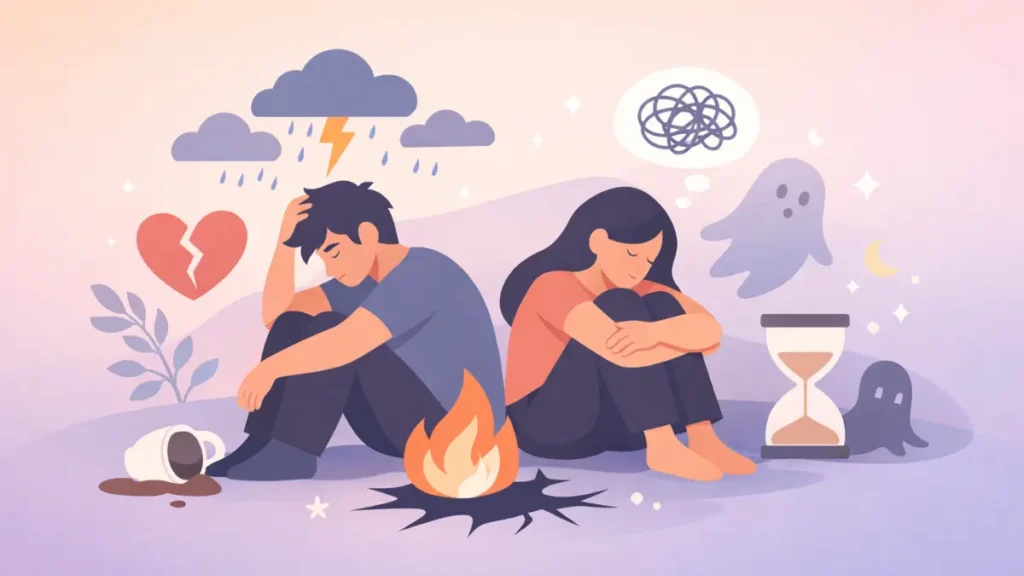
Most of us like to believe we have everything under control. We tell ourselves that we are fine, that we can handle it, that life is stressful for everyone anyway.
Sometimes that is true. But sometimes the voice insisting we are coping is trying to cover up the exact opposite.
Coping is not just about getting through the day. It is about how we process experiences internally. It is about the way our nervous system adapts to pressure, uncertainty or pain.
It is about whether our emotional responses lead us toward resilience or toward collapse. I did not learn that from a psychology textbook. I learned it from seasons where I looked “functional” on the outside while slowly draining myself on the inside.
In this article I want to unpack four subtle warning signs that you may not be coping as well as you think. These are not the obvious signals like crying every day or having panic attacks.
Those are hard to ignore. I am talking about the quiet behaviors that masquerade as strength, self-sufficiency or discipline, but are actually symptoms that your system is overloaded and about to bend in unhealthy directions.
This is not about judgment. It is about recognition. Because once you see the pattern, you cannot unsee it.
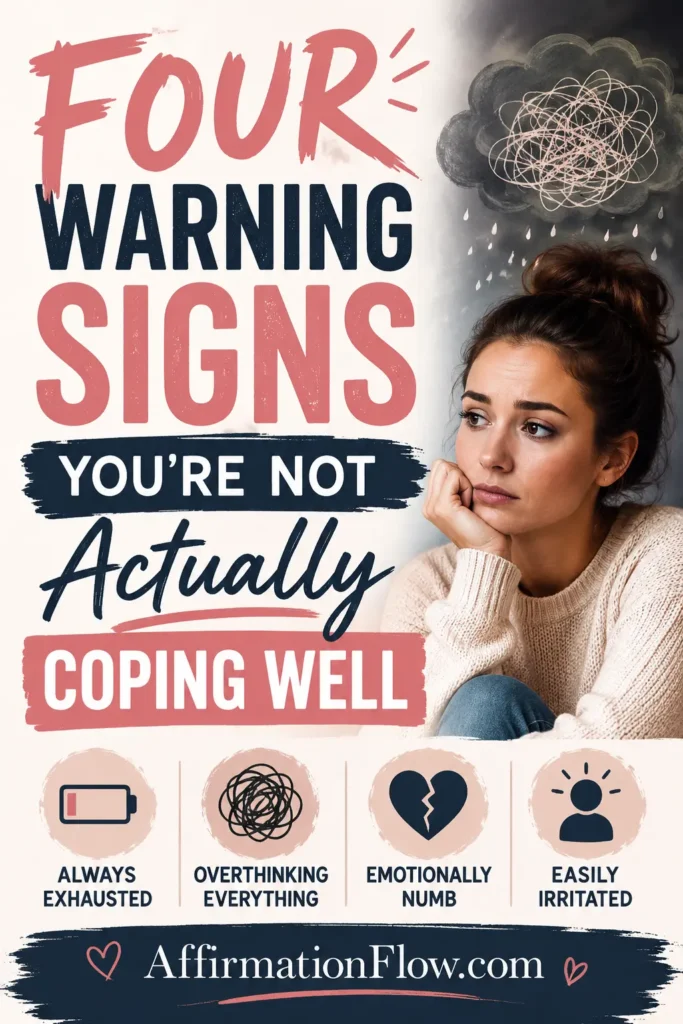
1. Productivity Becomes a Distraction From Your Inner World
One of the most deceptive signs of poor coping is when productivity becomes a form of emotional escape. It looks impressive from the outside.
You are hitting deadlines, organizing your calendar, volunteering for extra work, keeping up with routines and checking boxes like a machine. People praise you for how driven and dependable you are. They may even envy your discipline.
But just because something earns applause does not mean it is healthy.
Over-functioning is a coping mechanism rooted in avoidance. Staying busy protects you from having to feel. Motion becomes armor, because stillness feels dangerous.
When you sit still, your mind catches up to you. Your emotions start asking questions you have been postponing:
Why am I exhausted all the time?
Why do I feel disconnected?
Why do I keep trying to prove I am okay?
In my own life, I used productivity like a shield. The more overwhelmed I felt inside, the more I tried to outperform myself. It tricked even me into believing I was fine.
But productivity without emotional grounding comes with a cost. It drains your nervous system, because you never give it permission to downshift. Your sympathetic system keeps running like the road never ends.
What healthy coping looks like instead: Productivity becomes grounded rather than frantic. Rest and stillness do not feel threatening. Achievements feel chosen, not compulsive. You can pause without anxiety.
If that is not true for you, it may not be that you are thriving. It may be that you are running from something.
2. You Are Numbing Instead of Nourishing
Not all addiction looks destructive at first glance. Some looks harmless or even socially acceptable. Scrolling until your brain goes blank.
Binge watching shows until you lose sense of time. Going out every evening because silence feels too loud. Emotional eating that feels comforting in the moment but leaves a hollow aftertaste.
Excessive gym sessions disguised as discipline but fueled by anxiety. Even spiritual practices can become numbing if they are used to bypass feelings instead of processing them.
Numbing is the opposite of nourishing. Numbing removes sensation. Nourishing integrates it.
The problem with numbing is that it feels effective in the short term. It buys temporary relief. It keeps hard emotions at bay.
But it does not actually help your nervous system metabolize stress. It simply delays the bill. And when the bill arrives, it tends to be larger than expected.
A lot of people think they are coping because they are not falling apart. But not falling apart and actually healing are two different outcomes.
Numbing lets you keep operating while slowly separating you from your inner experience. It builds a gap between your life and your feelings. Over time that gap can become a canyon wide enough to trigger anxiety, emptiness or disconnection.
What healthy coping looks like instead: Nourishing behaviors do not suppress emotion, they make space for it. Think journaling, therapy, deep honest conversations, healthy movement, genuine rest, creative expression. These allow feelings to move through instead of getting stored.
If your habits are numbing instead of nourishing, you may not be coping as well as you think.
3. Your Threshold for Irritation Shrinks
One of the early signs that internal tension is building is irritability. People often overlook it because irritation is less dramatic than sadness or panic.
It is subtle. It hides inside everyday interactions. You snap faster. Your patience decreases. Things that were small begin to feel big. Your tolerance for inconvenience collapses.
This is not because you suddenly became a rude or hostile person. It is because your emotional regulating system is overloaded.
Your brain no longer has bandwidth to absorb micro-stressors. It is trying to keep itself functional with limited resources, and anything extra feels like too much.
I have seen this in myself during seasons of quiet burnout. I was not crying, not shutting down, not melting into despair.
But everything annoyed me. Loud noises, plans changing, text messages that needed replies, even being asked a simple question. I was not coping. I was collapsing in slow motion.
Irritability can also manifest inward. Instead of snapping at others, you snap at yourself. You become hyper-critical of your own mistakes. You set impossible standards. You get frustrated at your own needs. That inward hostility is a red flag too.
What healthy coping looks like instead: Your emotional window of tolerance stays open. Stressors do not immediately feel like threats. You have flexibility rather than rigidity. Your nervous system has capacity rather than panic.
If the world suddenly feels harder to tolerate, it is not because the world changed. It is because your system is signaling depletion.
4. You Feel Numb or Detached
The most paradoxical warning sign is numbness. People assume that if they are not feeling “bad” then they are doing okay. But numbness is not the absence of pain. It is the inability to feel fully alive. It is the body’s last line of defense when it believes it cannot handle more input.
Emotional detachment can look like indifference. Things that used to matter do not. Connections feel tiring. Excitement feels inaccessible. Even joy feels muted.
Sometimes numbness is misunderstood as peace. It is not. Peace is grounded. Peace has clarity. Peace feels like presence. Numbness feels like distance.
This sign is especially tricky because numbness keeps life functioning. It removes intensity, which makes daily tasks manageable.
But it also removes color. Eventually life becomes grayscale. You know you are alive because your body is moving, but you cannot feel yourself participating.
Detachment can also show up socially. You withdraw from people not because you dislike them, but because connection takes energy you no longer have. The risk is that the isolation feels easier at first. But easier does not always mean healthier.
What healthy coping looks like instead: Presence. Engagement. Genuine emotional range. The ability to feel highs and lows without collapsing or shutting down.
When numbness becomes your default state, coping has moved away from healing and toward survival mode.
How to Rebuild Healthy Coping
Recognizing these signs is the first step. But coping well is not about perfection. It is about recalibration. Emotional health is not linear. It is iterative.
Below are small starting points that support re-regulation:
- Put language to your internal world. Thinking and feeling are not the same. Try journaling, voice notes or honest conversation.
- Reintroduce rest as a biological need, not a reward.
- Let your nervous system switch out of constant vigilance.
- Notice the habits that numb versus the habits that nourish.
- Ask yourself what you avoid when you avoid stillness.
- Reconnect to people who make you feel seen rather than drained.
- Consider therapy not as crisis management but as maintenance.
- Slow down enough to hear what your body is telling you.
Coping is not just about pushing through. It is about making room for yourself again.
The Quiet Truth About Coping
People think coping is about endurance. But endurance without introspection becomes self-abandonment. The real test of coping is not how well you function under pressure. It is how honestly you can relate to yourself when life is heavy.
The warning signs above are not about weakness. They are indicators of humanity. And the sooner they are acknowledged, the sooner healing becomes possible.
Being okay is not the same as being yourself. And coping well is not the same as pretending you do not need support. The body always keeps score.
The emotional bill always comes due. But awareness gives you the power to pay it early, before the cost gets higher.